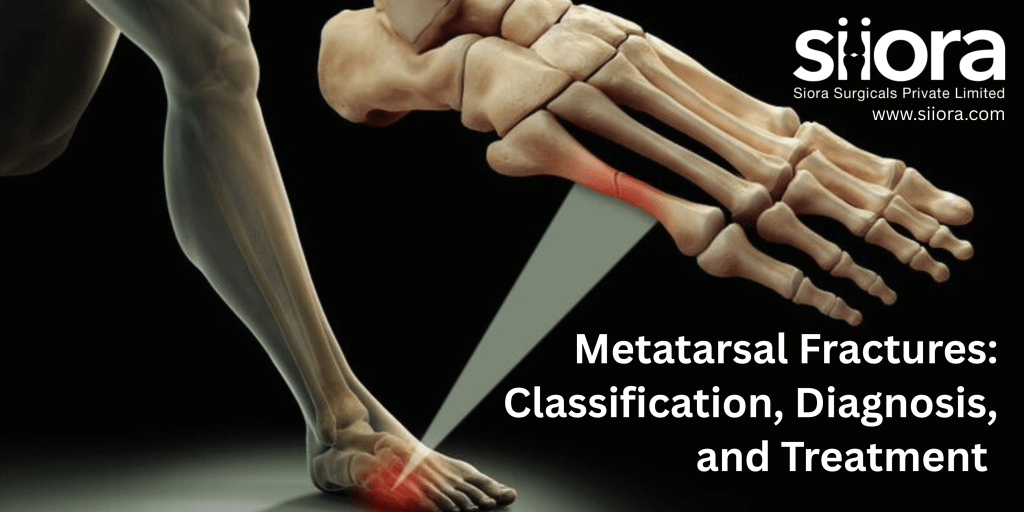
Metatarsal fractures are among the most common injuries seen in orthopedic practice, especially in athletes, laborers, and individuals with active lifestyles. These fractures involve the long bones of the foot, located between the toes and the midfoot. Treatment varies depending on the type and severity of the fracture, and understanding the classification and diagnostic process is crucial for effective management. In cases requiring surgical fixation, a metatarsal plate may be used to ensure optimal bone healing and alignment.
Understanding the Classification of Metatarsal Fractures
Metatarsal fractures can be broadly classified into traumatic, stress, and pathological fractures, each with its subtypes.
Traumatic Fractures
These result from a sudden impact or injury, such as dropping a heavy object on the foot or twisting it awkwardly. Traumatic fractures are often further categorized based on location:
- Base fractures (common in the 5th metatarsal)
- Shaft fractures
- Neck or head fractures
Stress Fractures
Caused by repetitive stress and overuse, these fractures are common in runners and military recruits. The 2nd and 3rd metatarsals are the most vulnerable due to their central position and limited flexibility.
Pathological Fractures
These occur in bones weakened by underlying conditions such as osteoporosis or tumors. They require a different management approach that focuses on both the fracture and the underlying pathology.
Another widely used classification system is Lawrence and Botte’s classification for 5th metatarsal fractures:
- Zone I: Tuberosity avulsion fractures (due to peroneus brevis tendon pull)
- Zone II: Jones fractures (located at the metaphyseal-diaphyseal junction)
- Zone III: Diaphyseal stress fractures
Each zone has specific treatment guidelines based on healing potential and blood supply.
How to Diagnose Metatarsal Fractures?
Accurate diagnosis begins with a thorough history and physical examination. Patients often report pain, swelling, and difficulty walking or bearing weight on the affected foot. Bruising and tenderness over the fracture site are common signs.
Imaging plays a key role in confirming the diagnosis:
- X-rays are the first line of investigation and usually sufficient for detecting traumatic fractures.
- MRI scans may be needed for stress fractures or if soft tissue involvement is suspected.
- CT scans offer detailed visualization in complex or intra-articular fractures.
It’s essential to differentiate between acute injuries and chronic stress fractures, as treatment protocols differ significantly.
What Are the Treatment Options for Metatarsal Fractures?
The goal of treatment is to restore foot function and prevent complications such as malunion, non-union, or chronic pain.
Conservative Management
Most non-displaced or minimally displaced fractures can be managed without surgery. Treatment involves:
- Rest and activity modification
- Ice and elevation
- Immobilization with a cast, boot, or stiff-soled shoe
- Gradual return to activity under medical guidance
Stress fractures, especially early-stage ones, often heal well with rest and offloading.
Surgical Management
Surgery is recommended for displaced fractures, multiple metatarsal involvement, or if conservative treatment fails. Internal fixation using screws, wires, or a metatarsal plate may be employed to stabilize the bones and ensure proper alignment.
The use of locking plates or low-profile implants has become increasingly popular due to their ability to maintain stable fixation with minimal soft tissue disruption. Post-surgical care typically includes immobilization, physical therapy, and gradual weight-bearing.
Recovery and Rehabilitation
Recovery time varies based on the severity and treatment method. Most patients can expect full recovery within 6 to 12 weeks, although stress fractures may require longer rest periods.
Rehabilitation plays a vital role in restoring strength, flexibility, and balance. Physical therapy exercises, including toe curls, ankle movements, and weight-bearing drills, help speed up recovery and prevent recurrence.
Final Thoughts
Metatarsal fractures, while common, should not be underestimated. Early diagnosis, proper classification, and individualized treatment are key to optimal outcomes. Whether managed conservatively or surgically, with or without a metatarsal locking plate, the focus should always remain on restoring mobility and minimizing complications for the patient.
 Siora Surgicals Pvt. Ltd.